
Linking Up Our Canada Lynx
Big news in Wild Canada – our Canada lynx are linking up! Recently, our dedicated Animal Care, Health & Welfare (ACHW) team facilitated introductions between our two Canada lynx, female ‘Kaya’ and…
Read MoreSeasonal Closures
Gorilla Amphitheatre: The Gorilla Amphitheatre is closed for the season from October 15th, 2025. Our gorilla troop remains viewable in their indoor habitat.
Prehistoric Park: Prehistoric Park is closed for the season from October 27th, 2025, pending favourable weather conditions.
PETRONAS Gateway to Asia Malayan Tapir Viewing: ‘Sempurna’ and her calf have daily access to the main indoor habitat from 10:30 a.m.–1:00 p.m. They’ll also have access to their behind-the-scenes space and may choose to spend time there, especially when the calf is nursing, so viewing isn’t always guaranteed. Thank you for your understanding.
Exploration Asia
The Exploration Asia Redevelopment project is officially underway! While there are some viewing impacts in the area, you can still visit many of your favourite species.
Due to significant construction activities in and around Exploration Asia, the zoo’s West Gate will remain closed for the 2025 season and is expected to remain closed until at least 2028/2029. This necessary step supports the safe movement of visitors while we undertake exciting improvements to animal habitats and visitor experiences.
Bite-Sized
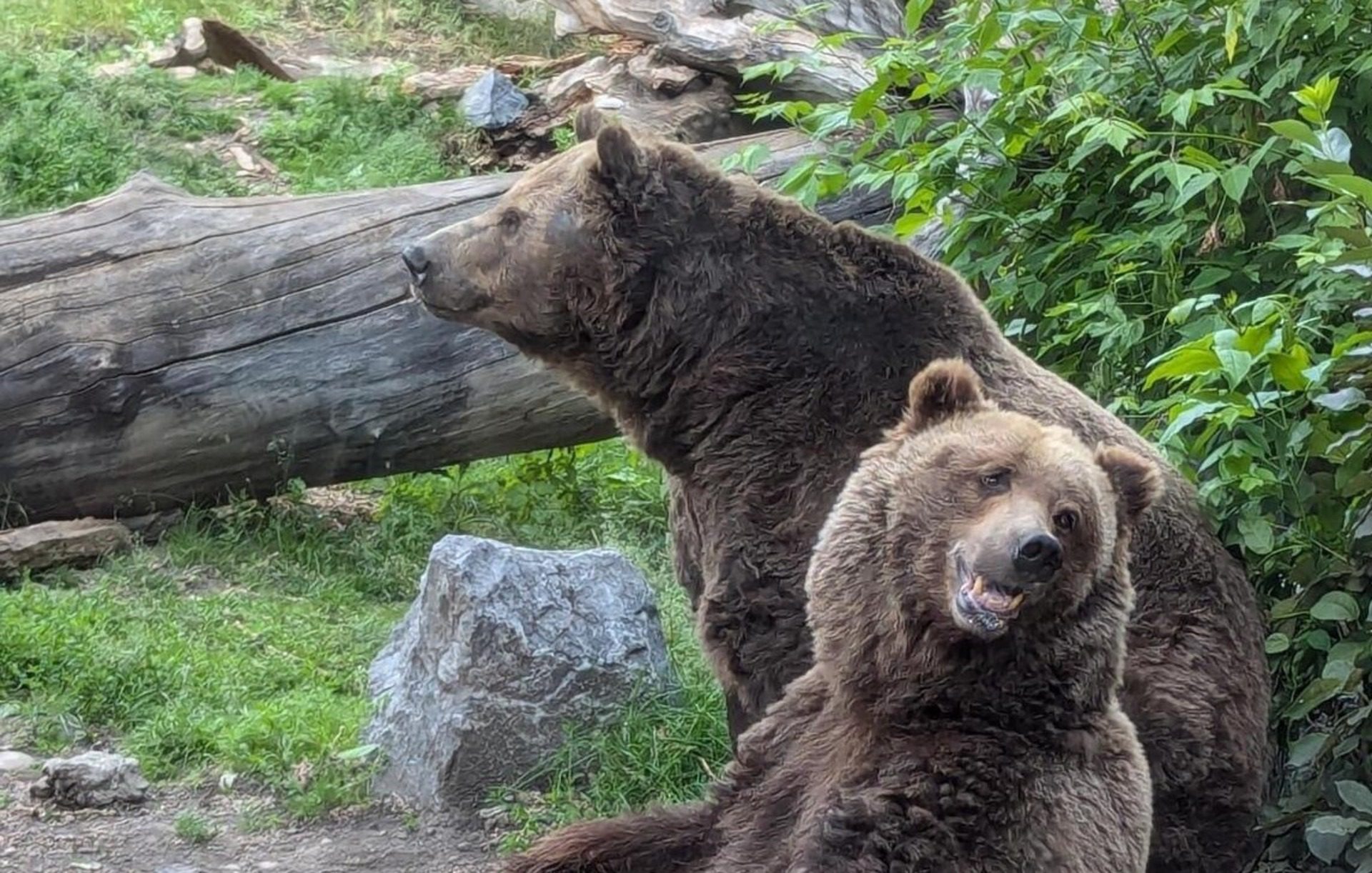
Following the recent passings of our senior grizzly bears, ‘Skoki’ and ‘Khutzeymateen’ (‘Khutzey’), our Animal Health team conducted necropsies, with follow up testing as indicated, to better understand their health and aging processes — a standard practice whenever an animal in our care passes away.
The pathology results on Skoki revealed he had developed pancreatic cancer with associated abdominal inflammation. Multiple age-related degenerative changes also were present, including moderate to marked spinal and limb arthritis, mild kidney disease, arteriosclerosis, and prostate changes.
Khutzey’s necropsy revealed moderate to marked degenerative osteoarthritis affecting her feet, multiple joints, and her spine, along with decreased muscling and early kidney disease.
Both bears lived remarkably long lives, far surpassing the average life expectancy of 20–25 years seen in the wild, or the median life expectancy of 22-27 years under human care — each reaching an incredible 35 years under human care. Their longevity is a true reflection of the dedication, expertise, and attentive care provided by our Animal Care, Health & Welfare team, who ensured they received individualized care that prioritized their comfort and well-being through every stage of their journey.
Losing long-term residents like Skoki and Khutzey is always difficult, but their stories are also reminders of the incredible care and commitment that define our work every day.
Thank you to everyone who played a part in their lives, and to all who continue to act with such heart for the animals we are privileged to care for.