
Grieving ‘Bishop’
We're saddened to share that earlier this month, we said goodbye to ‘Bishop’, our 9.5-year-old East African crowned crane. Bishop had been receiving treatment for several months for a suspected fungal mass…
Read MoreAmur Tiger Viewing Impact: Our Amur tigers may not be viewable on Thursday, March 19th, while contractors perform borehole testing in the area. Our wild boar and Pallas’s cats will continue to be viewable during this time. Thank you for your understanding.
Early Building Closure: Last entry to the ENMAX Conservatory will be at 3:00 p.m. and last entry to Kitamba Café will be at 3:30 p.m. on Friday, March 27th, to accommodate set up for our ZooDunnit (18+) event. Thank you for your understanding.
Seasonal Closures
Gorilla Amphitheatre: The Gorilla Amphitheatre is closed for the season from October 15th, 2025. Our gorilla troop remains viewable in their indoor habitat.
Prehistoric Park: Prehistoric Park is closed for the season from October 27th, 2025, pending favourable weather conditions.
PETRONAS Gateway to Asia Malayan Tapir Viewing: ‘Sempurna’ and her calf have daily access to the main indoor habitat from 10:30 a.m.–1:00 p.m. They’ll also have access to their behind-the-scenes space and may choose to spend time there, especially when the calf is nursing, so viewing isn’t always guaranteed. Thank you for your understanding.
Exploration Asia
The Exploration Asia Redevelopment project is officially underway! While there are some viewing impacts in the area, you can still visit many of your favourite species.
Due to significant construction activities in and around Exploration Asia, the zoo’s West Gate will remain closed for the 2025 season and is expected to remain closed until at least 2028/2029. This necessary step supports the safe movement of visitors while we undertake exciting improvements to animal habitats and visitor experiences.
Bite-Sized
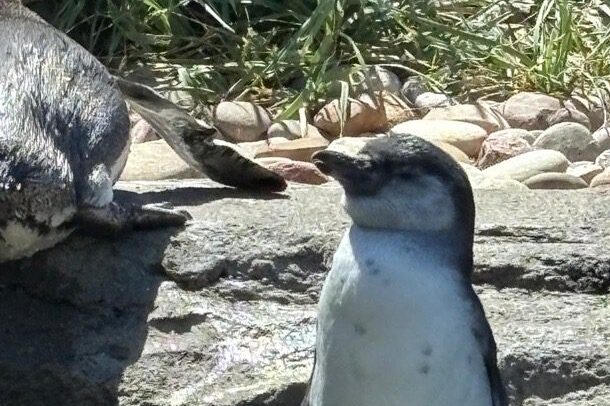
Who is black and white and has a new name? Our Humboldt penguin chick! Meet male ‘Lomas’!
Lomas was named after the coastal city of Puerto de Lomas in Peru, part of the Humboldt penguin’s native range. Wild Humboldt penguin populations have declined significantly in recent decades due to overfishing, guano harvesting, climate change, and human encroachment. Every successful hatch in human care helps support the survival of the species and raises awareness about the challenges they face.
A big thank you to our valued donors who participated in the naming vote and helped choose Lomas’ name!
We checked in with our Animal Care, Health & Welfare team to see how this young chick is doing. They report that Lomas is observant and quick to learn, carefully watching the world around him. On one of his first days outside the burrow, he approached his care team for a morning pill fish, though he still relies on his parents for feeding.
You can spot Lomas confidently swimming in the outdoor pool at Penguin Plunge. Stop by to greet him on your next visit!