
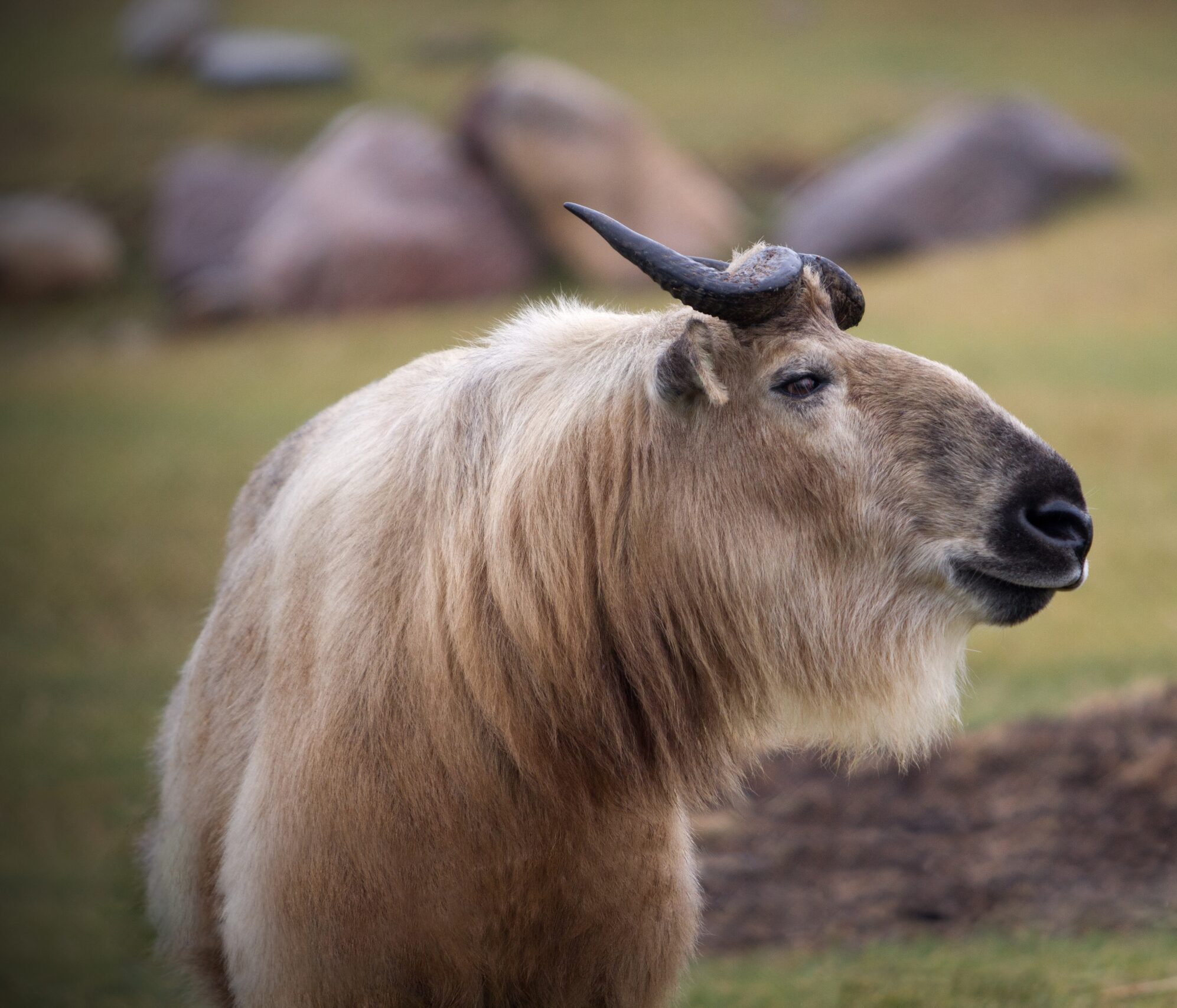
Sichuan Takin
We’re takin about being built for survival
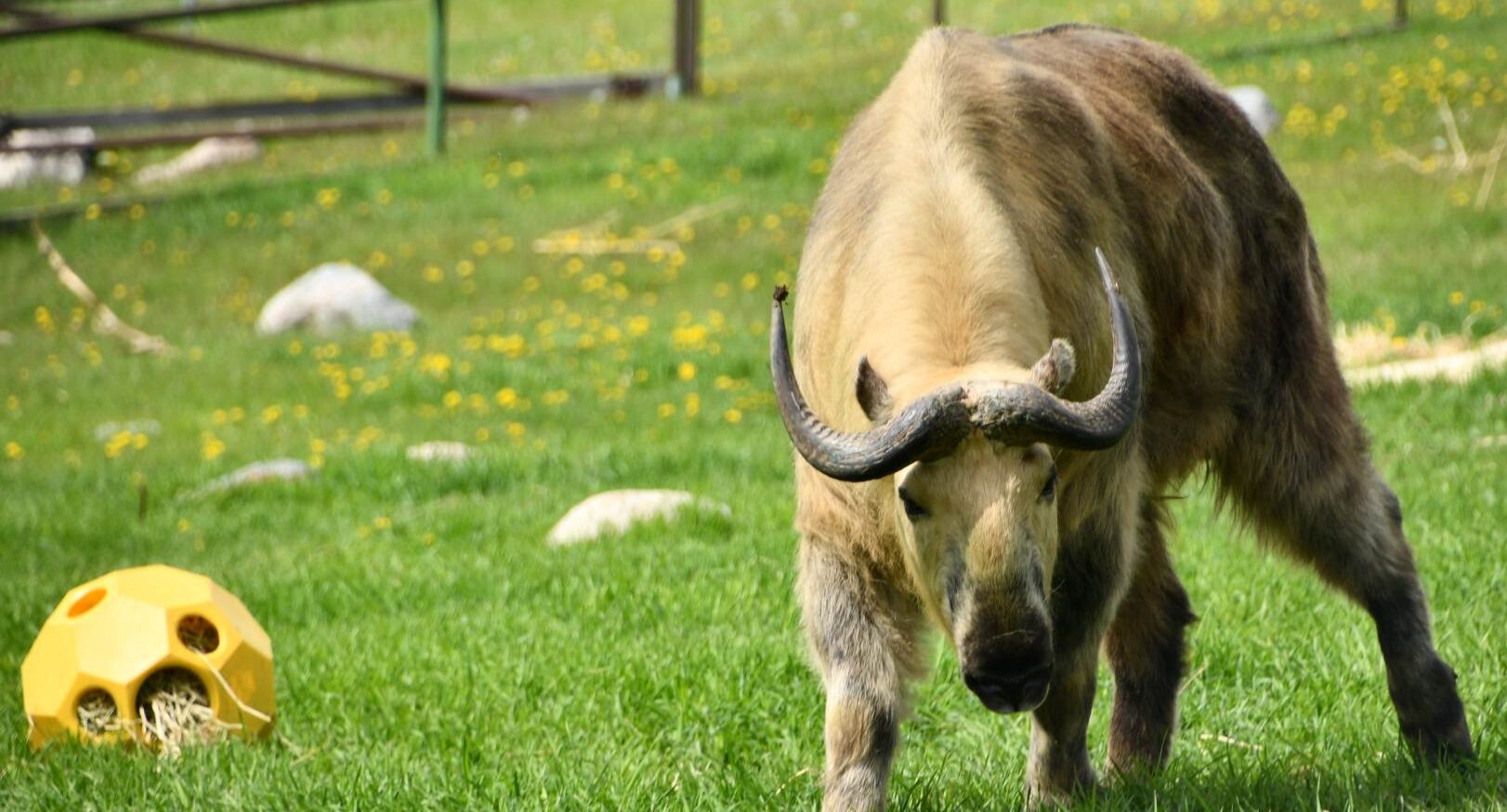
To survive in the world’s tallest mountains, these large, muscular animals have split hooves to help them make vertical migrations and navigate their rocky habitat in search of food. Sichuan takin aren’t picky eaters – they are known to eat at least 130 different species of plant. They will eat nearly any kind of vegetation in reach, propping up their front legs on trees to reach for higher leaves and even pushing over smaller trees to give themselves a boost when snacks are out of reach.
- IUCN Red List Status: Vulnerable (at high risk of extinction in the wild)
- Type: Mammal
- Habitat: Alpine forests of central and southwestern China
- Diet: Herbivore – leaves, shrubs, and bark
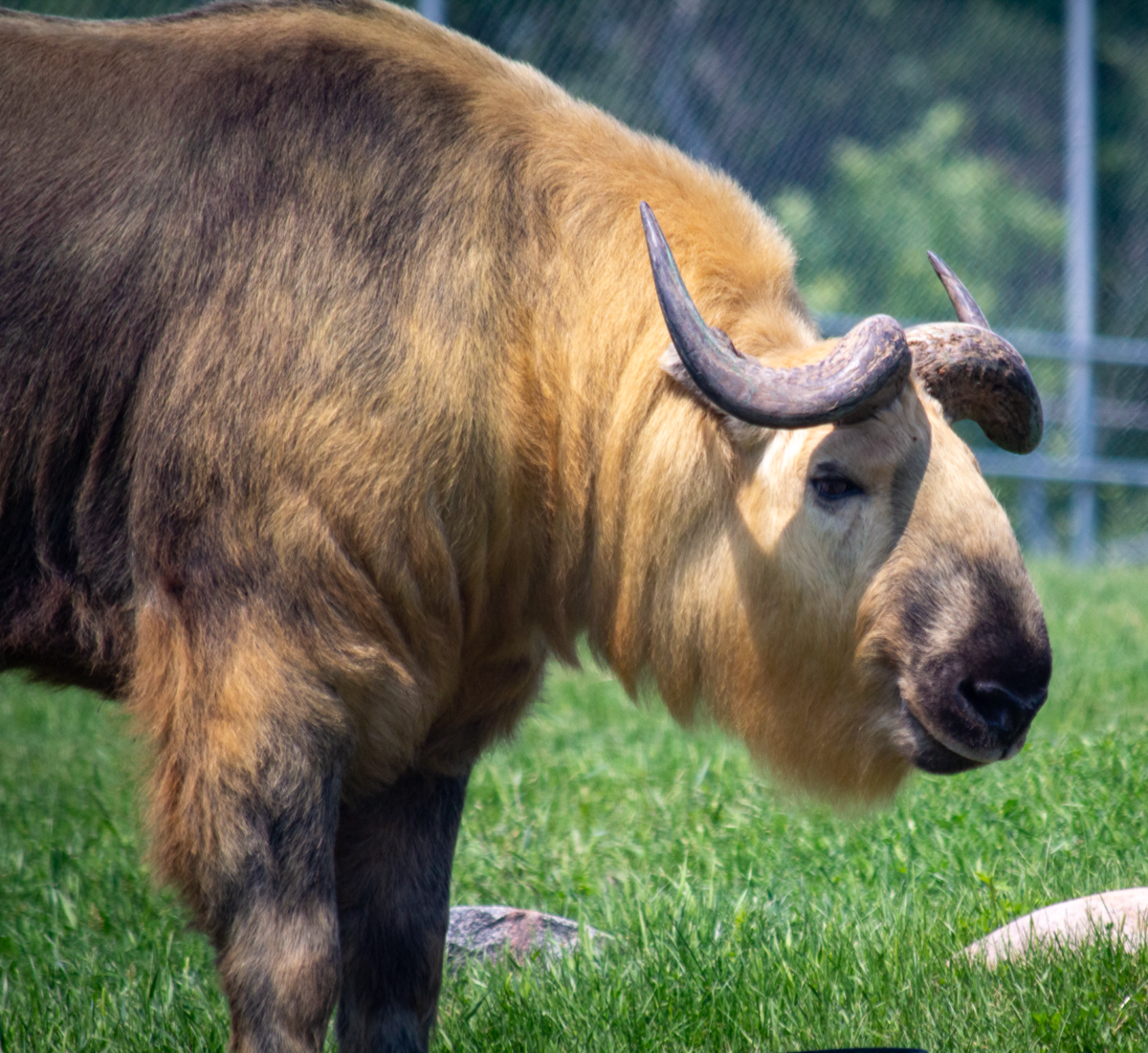
- Size: 1 to 1.4 metres at the shoulder, 1.5 to 2.2 metres in length
- Weight: females can be up to 280 kilograms, males can be up to 350 kilograms
facts about our animals
Fun Facts about Sichuan Takin
There are four distinct subspecies of takin (Budorcas taxicolor), the Mishmi, golden, Bhutan, and Sichuan.
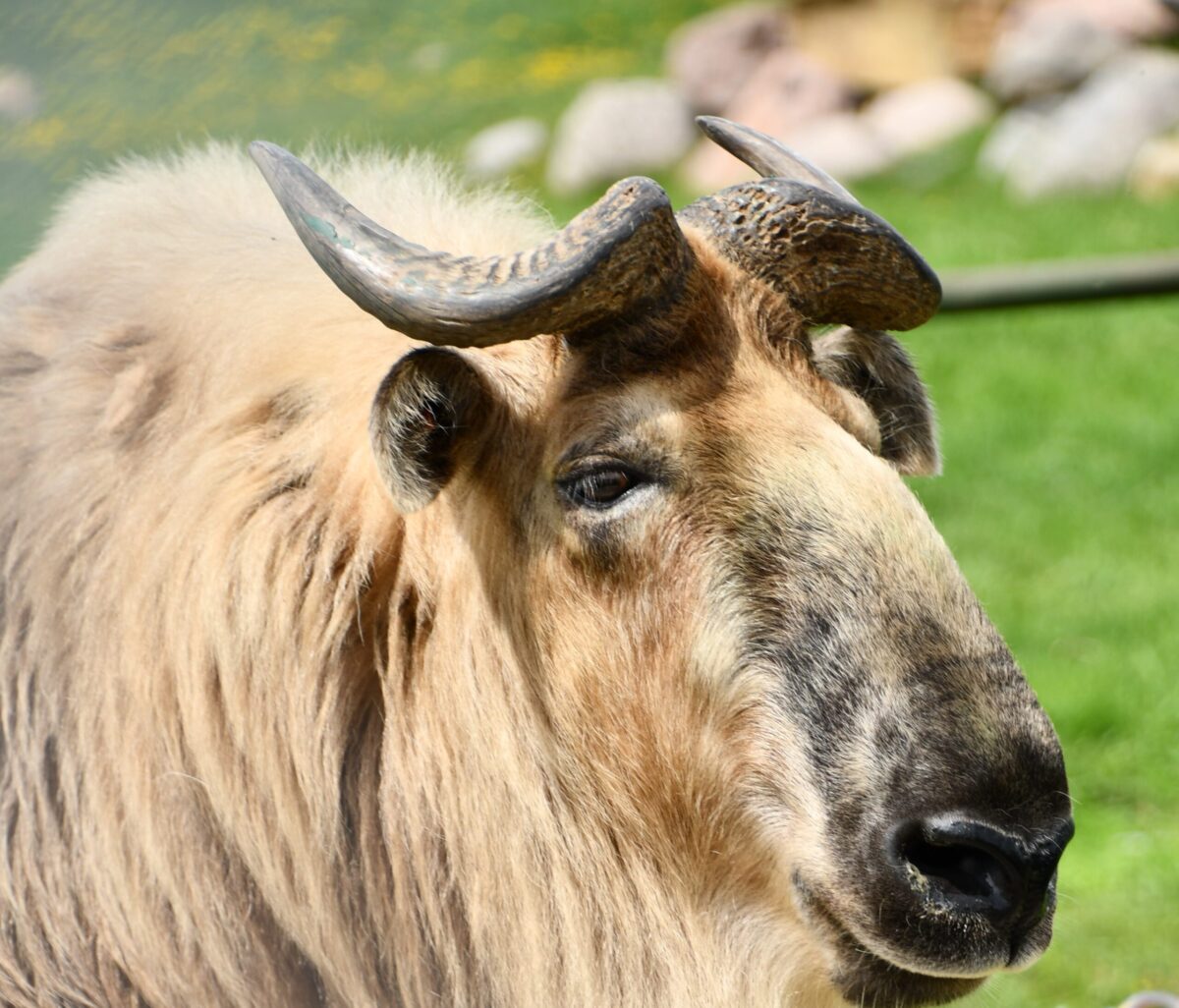
A takin’s nose has large sinus cavities to warm up inhaled air before it reaches the lungs.
Takin don’t have localized sweat glands – their skin secretes an oily substance that acts like a raincoat in their humid home.
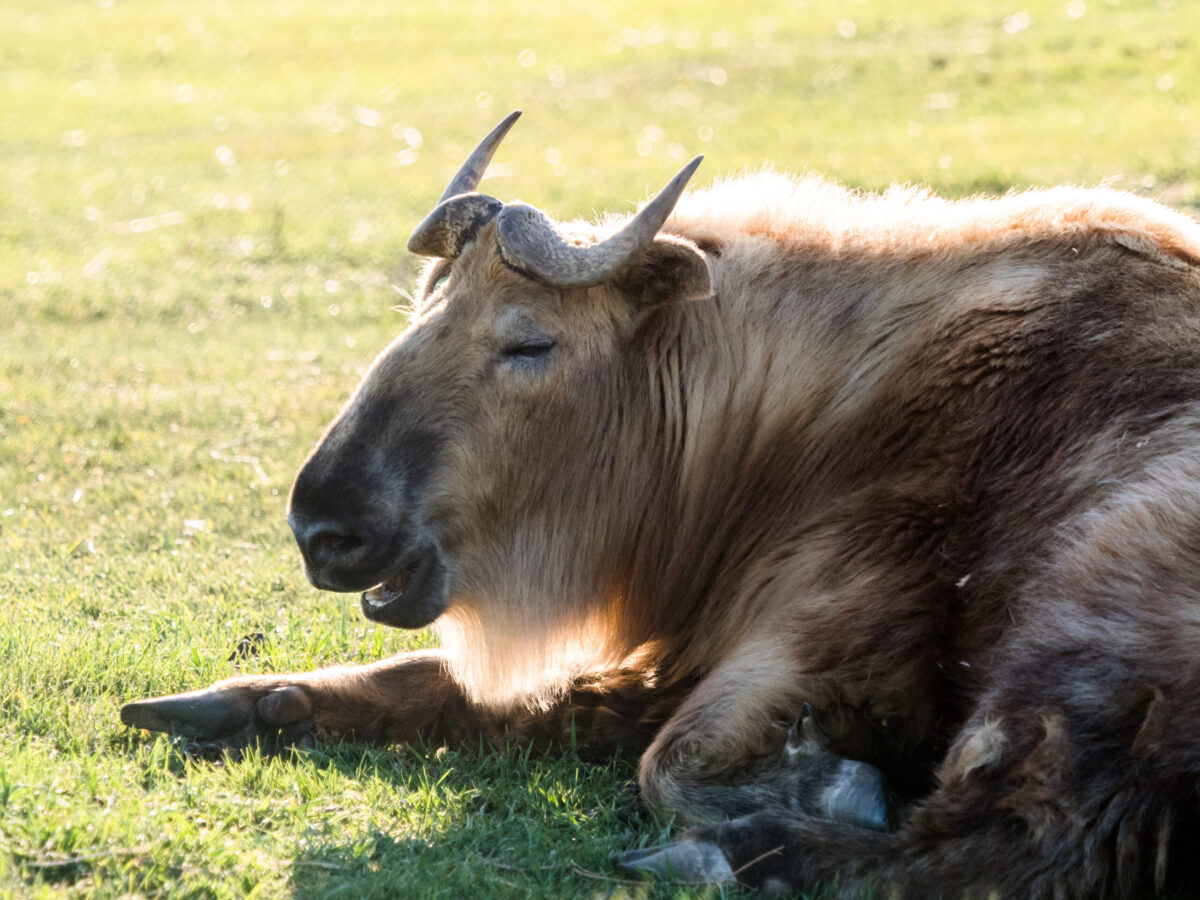
Both males and females have horns are typically between 30 and 60 centimetres in length.
Takin are ruminants, regurgitating their food and chewing it again as cud to digest it fully.
Despite their similarities to goats and antelopes, a takin’s closest relative is a sheep.
Donate
How you can help
Your donation makes a world of difference. With support for animal care, conservation programs, and education, you’re making the world wilder.
Meet our Animals
Imagine Asia
Plan your visit
Get close to wildlife
It’s time to make some memories. Here’s everything you need to know to plan an unforgettable day at the zoo.