
Remembering Takoda
We’re saddened to share that last month, our Animal Care, Health & Welfare (ACHW) team made the compassionate decision to euthanize Takoda, a 10-year-old male grey wolf, due to a rapid progression…
Read MoreRed Pandas: Our red panda mom and cubs will be off-habitat until approximately 11 a.m. on Monday, November 2, and Tuesday, November 3, to accommodate tree pruning in the area. Thank you for your understanding.
Tortoises: Our leopard tortoise and pancake tortoise are temporarily off-view while their habitat in the African Rainforest Building undergoes modifications. Thank you for your understanding.
The Canadian Food Inspection Agency (CFIA) has confirmed the presence of Highly Pathogenic Avian Influenza (HPAI) within 200 kilometres of the Wilder Institute’s Calgary Zoo.
The health and well-being of the animals in our care remains our top priority. Out of an abundance of caution, we’re proactively implementing the following measures to protect our avian species:
Thank you for your understanding and continued support as we work to keep the animals we love safe.
Due to significant construction activities in and around Imagine Asia, the zoo’s West Gate will remain closed until at least 2028/2029. This necessary step supports the safe movement of visitors while we undertake exciting improvements to animal habitats and visitor experiences.
Bite-Sized
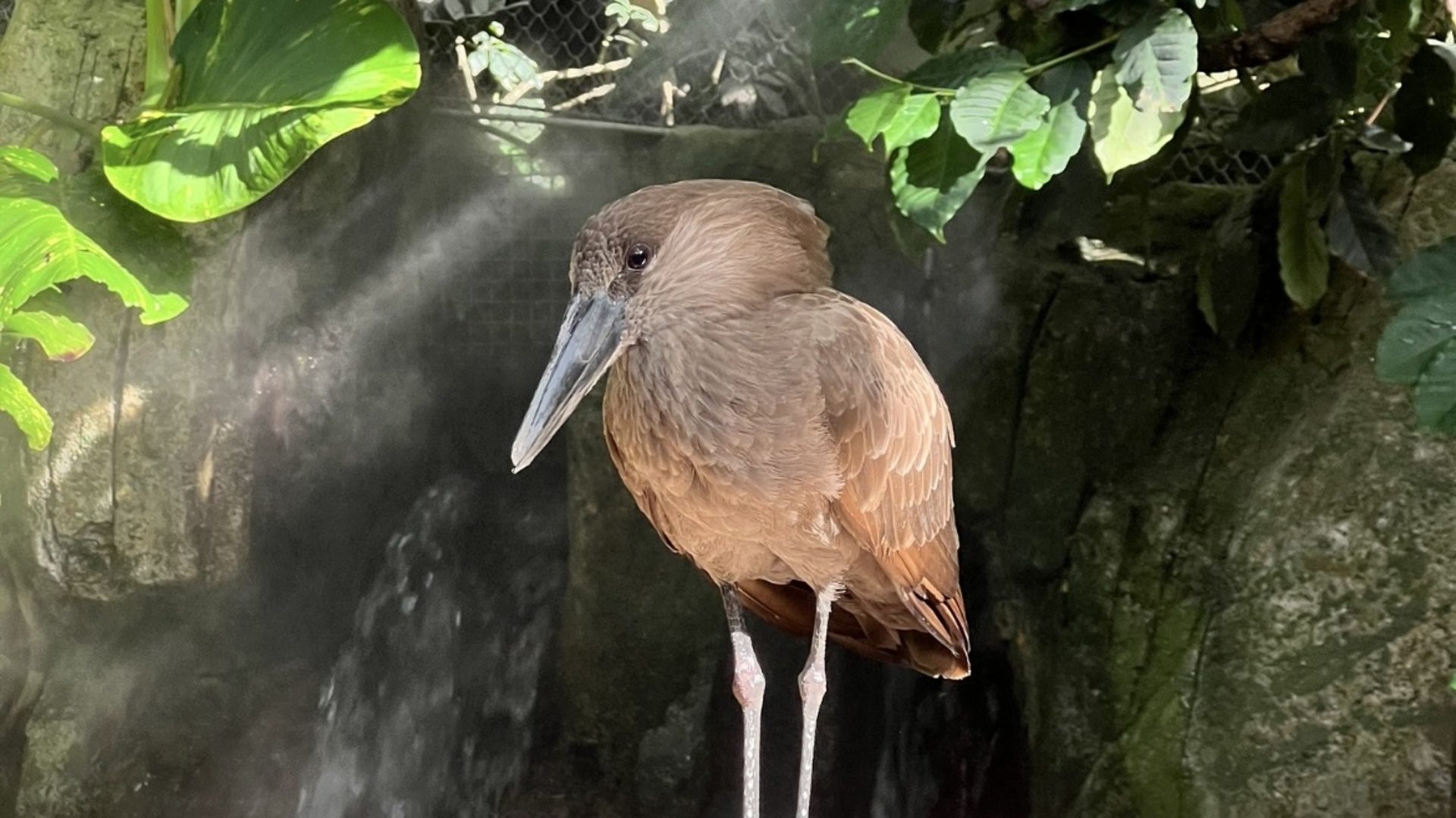
Last month, we said a heartfelt goodbye to one of our resident hamerkops, Homer, who was a beloved member of the African Rainforest Aviary family and a wonderful companion to female hamerkop Stella.
Homer hatched at the Dallas Zoo on September 24, 2010, and joined us in 2021 from Toronto Zoo. When he arrived, he had a chronic beak deformity and chronic intermittent right leg lameness. He was diagnosed with bilateral degenerative joint disease (DJD or osteoarthritis) in 2022 which was medically managed by our dedicated Animal Care, Health & Welfare (ACHW) team. Despite daily medication, Homer’s DJD progressed and led to worsening discomfort and lameness, eventually significantly impacting his quality of life. With no treatments options left available, the ACHW team made the compassionate decision to euthanize him on June 24, 2026.
Necropsy confirmed severe degenerative changes to his hocks (the joint between the tibia and upper foot bones) and moderate degenerative changes to his stifles (the anatomical equivalent of the human knee). A wound related to his reduced mobility was also present on his keel (a bone on the sternum and anchor for wing muscles) and he was in thin body condition.
At 15 years old, he had exceeded the median life expectancy of 13.3 years for male hamerkops under human care — a testament to the quality of care he received from the ACHW team. He will be fondly remembered for his skill at catching food mid-air and bringing joy to staff, volunteers, and guests.