
Welcoming Rida
Get ready to spot a new set of stripes! We're thrilled to welcome four-year-old female Amur tiger Rida (pronounced REED-ah) to our zoo family. She joins us from the European Association of…
Read MoreAdjusted Hours: With Alberta remaining on daylight time year-round, we will be adjusting our operating hours through winter to account for later sunrise and sunset. Starting on Friday, November 13, through Friday, February 12, we will be open daily from 10 a.m. to 5:30 p.m., with last entry at 4:30 p.m.
Grizzly Bears: Our grizzly bear cubs are currently off-habitat to support their first winter sleep.
The Canadian Food Inspection Agency (CFIA) has confirmed the presence of Highly Pathogenic Avian Influenza (HPAI) within 200 kilometres of the Wilder Institute’s Calgary Zoo.
The health and well-being of the animals in our care remains our top priority. Out of an abundance of caution, we’re proactively implementing the following measures to protect our avian species:
Thank you for your understanding and continued support as we work to keep the animals we love safe.
Due to significant construction activities in and around Imagine Asia, the zoo’s West Gate will remain closed until at least 2028/2029. This necessary step supports the safe movement of visitors while we undertake exciting improvements to animal habitats and visitor experiences.
Bite-Sized
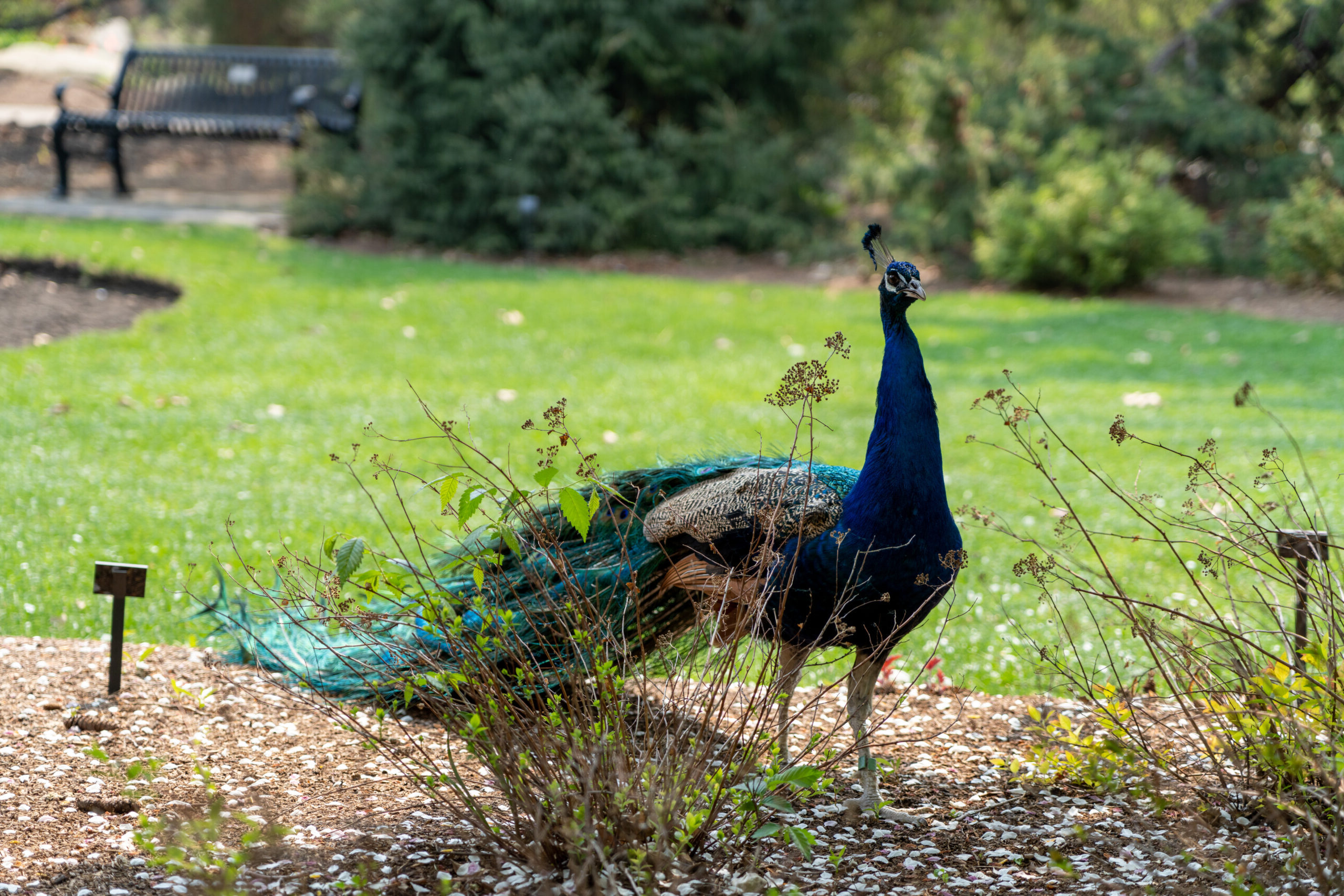
It is with heavy hearts that we share the passing of a beloved member of our peafowl muster, ‘Steve’.
Steve (green leg band) hatched here at the zoo in 2006 and, at 18 years old, he was the oldest member of our resident flock. While the median life expectancy for common peafowl in human care is approximately 16 years, Steve surpassed that milestone—an incredible testament to the dedicated, expert care he received from our Animal Care, Health & Welfare team throughout his life.
In his later years, Steve lived with several age-related health conditions, including chronic arthritis, neurological issues affecting his legs, and advancing kidney disease. These were carefully managed by our dedicated Animal Care, Health & Welfare team through medication and monitoring. Last month, when his health declined, Steve was brought to the Animal Health Centre for further evaluation. There, the team discovered a large, inoperable, and likely cancerous mass on his leg. Despite still eating well, he had rapidly lost weight. With a poor prognosis and his quality of life in decline, the difficult but humane decision was made to say goodbye.
Steve’s vibrant presence and striking plumage made him a favourite among staff, volunteers, and visitors alike. His memory lives on in the stories we share and in the lush garden spaces he loved to roam. Please join us in remembering Steve and celebrating the remarkable life of this beautiful bird.