
Welcoming Rida
Get ready to spot a new set of stripes! We're thrilled to welcome four-year-old female Amur tiger Rida (pronounced REED-ah) to our zoo family. She joins us from the European Association of…
Read MoreAdjusted Hours: With Alberta remaining on daylight time year-round, we will be adjusting our operating hours through winter to account for later sunrise and sunset. Starting on Friday, November 13, through Friday, February 12, we will be open daily from 10 a.m. to 5:30 p.m., with last entry at 4:30 p.m.
Grizzly Bears: Our grizzly bear cubs are currently off-habitat to support their first winter sleep.
The Canadian Food Inspection Agency (CFIA) has confirmed the presence of Highly Pathogenic Avian Influenza (HPAI) within 200 kilometres of the Wilder Institute’s Calgary Zoo.
The health and well-being of the animals in our care remains our top priority. Out of an abundance of caution, we’re proactively implementing the following measures to protect our avian species:
Thank you for your understanding and continued support as we work to keep the animals we love safe.
Due to significant construction activities in and around Imagine Asia, the zoo’s West Gate will remain closed until at least 2028/2029. This necessary step supports the safe movement of visitors while we undertake exciting improvements to animal habitats and visitor experiences.
Bite-Sized
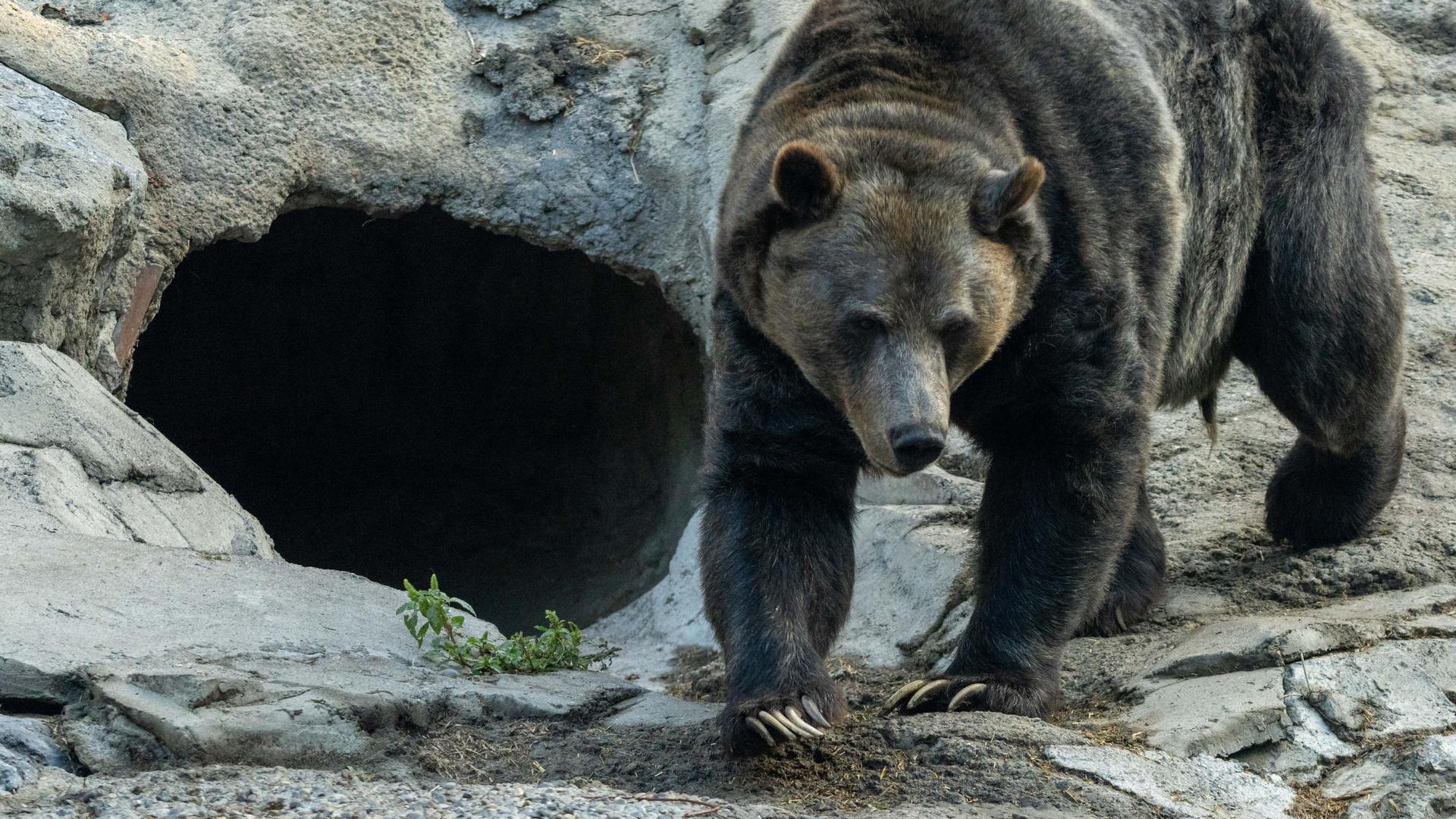
One of the hardest parts of our work is saying goodbye to the animals we love and care for. Today, our Animal Care, Health & Welfare team made the compassionate decision to euthanize our approximately 35-year-old male grizzly bear, ‘Skoki’.
As a wild-born bear, Skoki joined the Wilder Institute’s Calgary Zoo in 1996 at around six years old. He was a beloved member of our zoo family for nearly three decades, with a story known and cherished across Alberta and beyond.
At approximately 35 years old, Skoki was very geriatric for his species. His caregivers cherished every precious day with him, and it was a privilege to care for him through all the seasons of his life. In recent years, he received attentive, supportive care—including pain management, diet adjustments, and habitat modifications—to ensure his comfort during his golden years.
Born in Banff National Park, he was first known as “Grizzly Bear #16” (GB16). In his early years, Skoki showed little interest in people, but as he matured, he learned to associate humans with food, earning a reputation as a “problem bear.” Our partners at Parks Canada worked tirelessly to encourage GB16 to stay away from people, relocating him several times, but he always returned to the Bow Valley. When relocation proved ineffective, Parks Canada advocated for him to come into human care at the zoo, giving him a chance to live a long, full life rather than be destroyed.
Skoki became much more than a bear in our care—he became family. Over the years, his calm, easy-going nature allowed him to live alongside several habitat mates, and his presence taught millions of visitors about bears and how to safely coexist with them in the wild. Skoki was truly a great bear and his legacy is one of education, compassion, and a deep connection between people and wildlife.
We hope his story continues to inspire everyone to help keep wild bears wild:
With Skoki’s goodbye fresh on our hearts, our focus is now on his habitat mate, ‘Khutzmateen’, affectionately known as “Khutzy.” She is also very geriatric and receiving comfort care during this season of her life. Her dedicated caregivers are cherishing every precious moment with her, knowing it will soon be time to lovingly walk her home.
Skoki will be deeply missed, but his impact on wildlife, our community, and everyone who had the privilege to know him will never be forgotten.